CurtisJ  ·  Slow-Cooker Kalua Pork with Cabbage
Slow-Cooker Kalua Pork with Cabbage
Photographed in CurtisJ’s Honolulu kitchen · April 2026

Recipe · Island Comfort

Slow-Cooker Kalua Pork with Cabbage

Jump to recipe ↓

A weeknight plate-lunch version of kalua pork and cabbage, built around liquid smoke as seasoning and staged so the cabbage stays bright.

Before you cook

Kalua pork and cabbage is a weeknight plate lunch, not a luau recreation.

The pork does the heavy lifting; the cabbage exists to catch the salty, smoky fat and turn every bite into a small excuse to eat more rice. This is the home version that shows up on a plate lunch, not the underground-oven version you build a Saturday around.

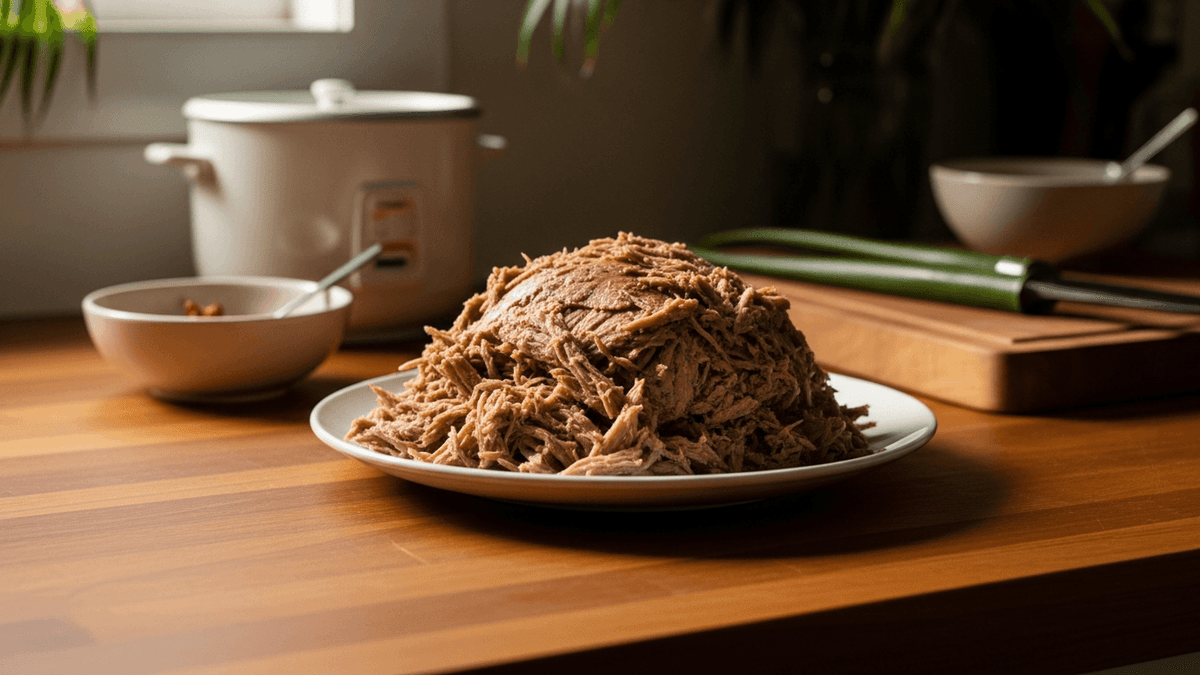
If you have eaten kalua pork from an imu at a real luau, you know the texture and salt level the slow cooker is trying to land. Fork-shreddable pork, cured just enough with Hawaiian salt that it could hold its own without a sauce, and a faint smoke that runs through every bite. The at-home version uses liquid smoke as a seasoning rather than a shortcut, and the slow cooker handles the long cook that the imu handles underground.

The twist that makes this post-able is the cabbage. Staged correctly, it turns a single dish into a full plate. It catches the seasoned fat as it cooks down, holds its shape enough to serve as the green on the plate, and balances the saltiness of the pork so the whole dish feels lighter than it has any business being.

What to get right

Three things carry this recipe. Get them right and the rest is time.

1. The salt. Hawaiian salt is the whole seasoning. Coarse, mineral, and if you can find alaea (the red clay-mixed variant), better. Kosher salt works but the mineral edge is not the same. Do not skip the salt rub and do not substitute table salt — the crystal size matters for how the cure sets on the surface before the slow cooker does its work.

2. The smoke. Liquid smoke is a tool, not a cheat. Wright's Hickory is the Hawaii supermarket standard and has the right balance — not chemical, not overpowering. One teaspoon is enough for a 4-pound shoulder. More than that and the pork starts tasting like burnt tires.

3. The cabbage timing. If you add the cabbage at the start, it cooks for 8 hours and turns into gray mush. Added for the last 45 to 60 minutes on high, it stays tender at the thick end and bright green on the edges. This single staging move is what makes it a plate lunch instead of a stew.

How to serve it

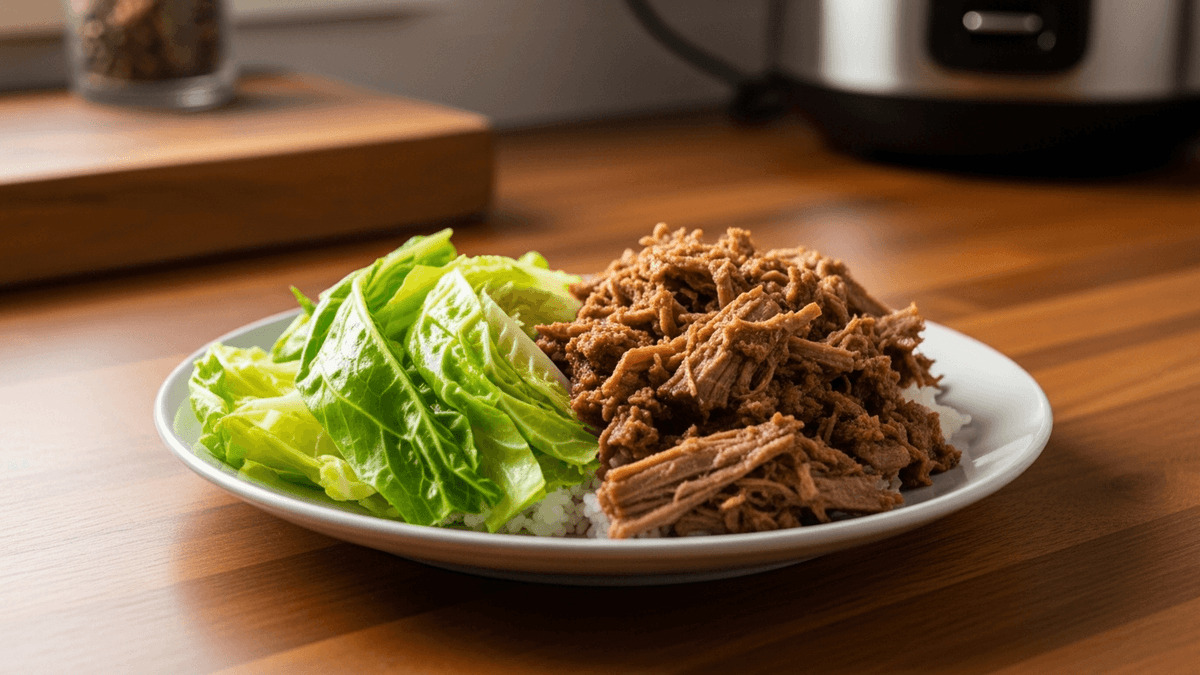
The default plate: two scoops of rice on one side, cabbage wedges tucked against the pork, shredded pork on top with a spoonful of the braising liquid, maybe a scoop of mac salad if you are running the full plate lunch. Chili pepper water on the side. See the plate lunch guide for the full format.

Two alternate plates worth knowing:

  • On bread: pile the pork and a little chopped cabbage on a soft sweet roll with a drizzle of the braising liquid. It is closer to a Hawaiian pulled-pork sandwich than a bao, and it eats clean at a party.
  • In a bowl: rice at the bottom, cabbage around the edge, pork in the middle, a fried egg on top, furikake over everything. Breakfast-for-dinner version.

Make ahead and reheat

Pork freezes well. Cabbage does not. If you are making this for a week of plate lunches or a party, cook the pork a day ahead, let it rest in its braising liquid overnight in the fridge, and cook the cabbage the day of service. The pork actually gets slightly better on day two as the salt and smoke settle deeper into the meat.

Reheat the pork covered in a skillet with a splash of braising liquid. For plate-lunch-style edges, finish the reheated pork on a dry hot pan for a minute per side to crisp up. That is closer to what a drive-in serves.

For the deeper history of the dish and the difference between imu-cooked kalua and the home version, see what kalua pig is. For the oven method (slightly drier, slightly more caramelized), see the oven-roasted kalua. For another weeknight classic that rides the same plate, see the weeknight loco moco.
Recipe

Ingredients
  • 3-4 lb pork shoulder (boneless, or bone-in for more flavor)
  • 1.5 tsp Hawaiian sea salt (or coarse sea salt with a pinch of alaea clay if you have it)
  • 1 tsp liquid smoke (Wright's Hickory is the local standard)
  • 2 garlic cloves, smashed (optional but recommended)
  • 1 small head green cabbage, cored and cut into 2-inch wedges
  • 6 cups cooked white rice, to serve
Instructions
  1. 01Score the pork shoulder in a shallow diamond pattern, about a quarter-inch deep. This lets the salt and smoke penetrate without drying the surface out.
  2. 02Rub Hawaiian salt into the pork on all sides, working it into the scored cuts. Let it sit at room temperature for 15 minutes. This is the only seasoning the pork gets.
  3. 03Drizzle the liquid smoke over the pork, pressing it into the surface. Tuck the smashed garlic cloves underneath if using.
  4. 04Place the pork fat-cap up in the slow cooker. No liquid added — the pork releases enough on its own. Cover and cook on LOW for 8 hours, or until a fork twists cleanly in the meat.
  5. 05Ninety minutes before serving, lift the pork out to rest on a cutting board. Skim the fat off the braising liquid (it comes off easily once slightly cooled) and reserve about a cup of liquid.
  6. 06Add the cabbage wedges directly to the slow cooker, nestled into the remaining braising liquid. Cover and cook on HIGH for 45-60 minutes, until the cabbage is tender at the thick end but still bright green and holds its shape.
  7. 07While the cabbage cooks, shred the pork with two forks. Discard obvious fat pockets but keep the darker, seasoned bark — that is the flavor. Pour a few tablespoons of the reserved braising liquid over the shredded pork to keep it moist.
  8. 08Serve: two scoops of rice, a wedge or two of cabbage, a generous pile of shredded pork on top. Spoon a little more braising liquid over the rice. Eat hot.

Prep
10 min
Cook
8 hr
Total
8 hr 10 min
Yield
6 servings

Quick answers

Can I make kalua pork without liquid smoke?

Yes. Wrap the pork in banana leaves (or ti leaves if you have them) before placing it in the slow cooker, and add a smoked paprika rub to the salt. You lose about 30 percent of the smoke intensity, but the texture and saltiness carry the dish without it.

What cut of pork works best for slow-cooker kalua?

Pork shoulder, also called Boston butt. Boneless is easier to handle; bone-in gives slightly deeper flavor. Loin cuts dry out before they shred. Pork belly is too fatty for this preparation. Pick a 3 to 4 pound piece for a 6-quart slow cooker.

Why add the cabbage at the end instead of at the start?

Cabbage cooked for 8 hours turns gray, mushy, and bitter. Added for the last 45 to 60 minutes, it stays tender at the thick end, bright green, and keeps the slight sweetness that balances the salty pork. This staging is the whole reason to cook the dish this way at home.

Can I make this in an Instant Pot instead?

Yes. Cook the pork under high pressure for 75 minutes with a 15-minute natural release, then add the cabbage and pressure-cook for another 3 minutes with a quick release. The texture is close to the slow-cooker version, though the slow-cook version renders slightly richer.

How do I store and reheat leftovers?

Store the pork and cabbage separately in the fridge for up to 4 days, or freeze the pork (not the cabbage) for up to 2 months. Reheat the pork in a covered skillet with a splash of the reserved braising liquid over medium heat. Crisp it on a hot dry skillet for a minute after reheating if you want plate-lunch-style edges.

The Friday Letter

One recipe a week. No filler, no affiliate spam.

CurtisJ's kitchen notes in your inbox every Friday.

Unsubscribe any time. One email a week, never more.

CurtisJ