Before you cook
Most of us are not spit-roasting a whole pig. Here is the home version.
Filipino lechon is one of the signature proteins at Hawaii parties, right next to kalua pig and kalbi. The whole-pig version takes a spit, 8 hours, and a backyard; the home version takes a pork shoulder, an oven, and a Saturday. This covers both, with honest notes on which is worth your weekend.
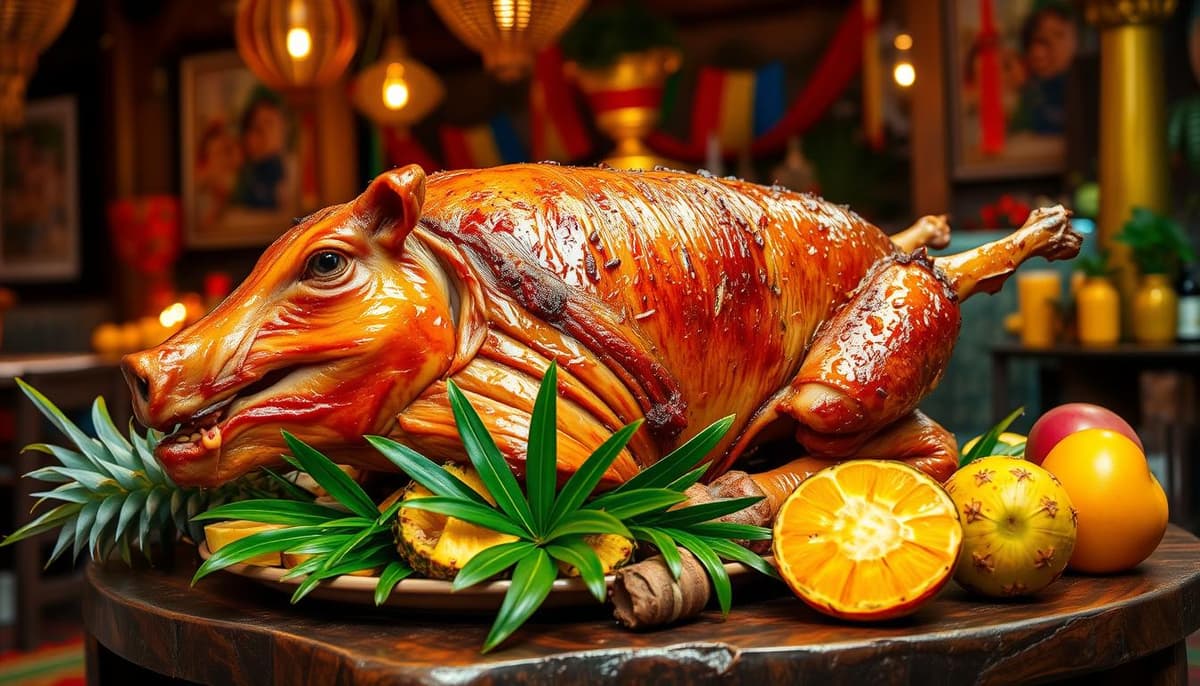
Lechon is Filipino roast pig. In the Philippines it is the centerpiece of fiestas, weddings, and Christmas tables — a whole pig stuffed with lemongrass and garlic, spit-roasted over charcoal until the skin shatters like glass. In Hawaii, Filipino immigration starting in 1906 brought lechon along, and the dish has been part of local Hawaii food for a century. Filipino families are now the largest immigrant group in Hawaii, and lechon is as local to a Hawaii backyard party as kalbi or kalua pork.
This guide covers the full range: selecting a pig for a whole-hog roast, the simpler home version with pork shoulder or pork belly, the seasonings and sauces, and how to fit lechon onto a Hawaii-style party plate. Whether you are doing the weekend-long commitment or the weeknight scale, the rules below are the ones that matter.
Where Filipino lechon fits in Hawaii
Lechon is not Hawaiian food in origin, but it is Hawaii food now. At a local birthday party or graduation luau, you might see a spread that runs: kalua pig from the imu (or slow cooker), kalbi short ribs off the grill, chicken adobo from the stovetop, and lechon on a long tray with dipping sauce on the side. All four proteins share the table because Hawaii food is additive, not exclusive.
Culturally, lechon in Hawaii trails closely with Filipino celebration traditions: weddings, debuts, Christmas, Easter, fiestas that mirror the ones in the home country. The whole pig still shows up at those events, usually ordered from a commercial roaster (Fat Rick's or similar in Honolulu) or cooked at home by a family member who has the rig to do it. For everyday home cooking, smaller-scale versions dominate: a pork belly, a pork shoulder, or a boneless slab in the oven.
Choosing the pig
Two very different decisions depending on whether you are going whole-hog or scaling down.
For a whole pig
Plan roughly one pound of dressed (cleaned) weight per person. Smaller pigs under 90 pounds cook more evenly and the meat stays tender; older, larger pigs need more technique to keep from drying out. A 60-to-100 pound dressed pig comfortably feeds 20 to 50 guests depending on whether lechon is the centerpiece or one of several proteins.
Buy from a farm if you can; commercial butchers mark up significantly, and a good farm pig has better fat-to-meat balance. Ask the farmer to dress the pig (remove internal organs, split or keep whole per your cooking method). Frozen is fine for spit-roasting; thaw fully in a cold ice bath over 24 to 36 hours.
| Live Weight | Dressed Weight | Guests | Cooked Meat per Guest |
|---|---|---|---|
| 60 lb | 40 lb | 20 | 1 lb |
| 140 lb | 100 lb | 50 | 1 lb |
| 210 lb | 150 lb | 75 | 1 lb |
| 45 lb | 30 lb | 20 | 0.75 lb |
| 105 lb | 70 lb | 50 | 0.75 lb |
| 160 lb | 110 lb | 75 | 0.75 lb |
For a home-scale roast
Pork shoulder (bone-in, 5 to 7 pounds) for shreddable Filipino-style roast. Pork belly (skin on, 3 to 5 pounds) for lechon kawali or lechon liempo — crisp skin, meaty fat, closer to the whole-pig experience at a fraction of the work. Either cut feeds 8 to 12 people and fits in a standard oven.
Avoid loin cuts — they dry out before the skin crisps. Avoid pre-cut cubes or rolls — the connective tissue that makes the dish work is already broken down.
Seasonings and stuffing
Filipino lechon is not a heavily-seasoned dish. The skin gets the glory; the meat gets salt, garlic, and aromatics. The stuffing (for a whole pig) is what adds fragrance without competing with the pork.
Marinade rub (for 5-to-7 pound pork shoulder)
- Garlic: 10-12 cloves, minced
- Sea salt or Hawaiian salt: 1 tablespoon, coarse
- Black pepper: 1 teaspoon, freshly ground
- Bay leaves: 3-4, crumbled
- Vinegar (cane or palm for authenticity, white if needed): 2 tablespoons
- Oil: 2 tablespoons neutral oil for rubbing the skin
Mix the garlic, salt, pepper, bay, and vinegar into a paste. Score the pork skin in a diamond pattern about a quarter-inch deep. Rub the paste into the scores and the meat beneath. Let it sit uncovered in the fridge overnight — this dries the skin, which is the single most important step for crackling.
Optional stuffing (for a whole pig or large roast)
- Lemongrass, 2-3 stalks, bruised and tied
- Spring onions, 1 bunch
- Garlic, 1 head, smashed
- Bay leaves, 6-8
- Star anise, 2-3 pods
These go into the cavity for a whole pig or are pressed against the meat side for a rolled shoulder. They perfume the meat as it cooks without dominating.
The home method: oven-roasted shoulder or belly
This is the version you can do on a Saturday afternoon. Serves 8-12.
- Pat the overnight-marinated pork completely dry with paper towels. The skin must be as dry as possible before it goes in the oven.
- Rub the skin (only — not the meat side) with oil and an additional pinch of salt.
- Start the pork at 500°F for 30 minutes, skin-side up, in a roasting pan with a rack. This initial blast starts the skin blistering.
- Drop the oven to 300°F and roast for another 3 to 4 hours (for a 5-7 pound shoulder) or 2 hours (for a belly). Baste the skin every 45 minutes with the pan drippings.
- In the final 20 minutes, crank the oven back to 500°F or broil to finish the skin. Watch closely; the line between crackling and burnt is about 90 seconds.
- Rest the pork uncovered for 20 minutes before serving. Cutting too soon loses the skin-to-meat contrast.
For the skin to shatter, three things have to be right: dry surface, high initial heat, high final heat. If any step goes wrong the skin turns leathery instead of crisp.
The whole-pig method: a weekend commitment
If you are doing the full version, skip the oven entirely. A spit-roast setup over charcoal is the traditional method. Rotisserie at 275°F for 1 hour and 15 minutes per 10 pounds of dressed weight, with the last 30 minutes at high heat to set the skin.
The underground-oven method (imu) is also possible and is closer to how some Hawaii families have traditionally cooked larger pigs — though imu is most associated with kalua pig, not lechon. Lechon wants dry heat and direct crackle on the skin; the imu steams, which gives a different texture. They are two different dishes that both start with a pig.
For a real lechon, go charcoal spit or a commercial rig. Start the fire early, baste with coconut water (authentic) or salted water every 45 minutes, watch the skin closely in the last hour. A meat thermometer in the thickest part of the shoulder should read 195°F when done — the connective tissue has fully broken down.
Dipping sauces
Lechon sauce is a thick, dark, liver-and-vinegar-based sauce that Filipino cooks make from scratch or buy bottled. The commercial standard is Mang Tomas (available at any Hawaii Asian grocery, and most mainland Filipino or pan-Asian stores).
The home version: soy sauce, vinegar (cane preferred), sugar, black pepper, garlic, and a small amount of ground chicken liver simmered until thick. Some families skip the liver and use breadcrumbs as a thickener. Either way, the sauce should be tangy-sweet and slightly thick, not pourable.
Alternative dipping sauces that show up at Hawaii parties next to lechon:
- Toyomansi: shoyu + calamansi juice + crushed garlic + sliced Hawaiian chili peppers. Closer to a dipping shoyu than a sauce.
- Bagoong: fermented shrimp paste, salty-funky, an acquired taste but traditional.
- Simple salt and calamansi: when the lechon is already well-seasoned, a squeeze of calamansi and a sprinkle of salt is enough.
Serving and the Hawaii party plate
Lechon on its own is the centerpiece; a Hawaii party builds out from there. The typical Hawaii-party lechon plate:
- Two or three slices of lechon with a piece of skin attached
- A scoop of white rice
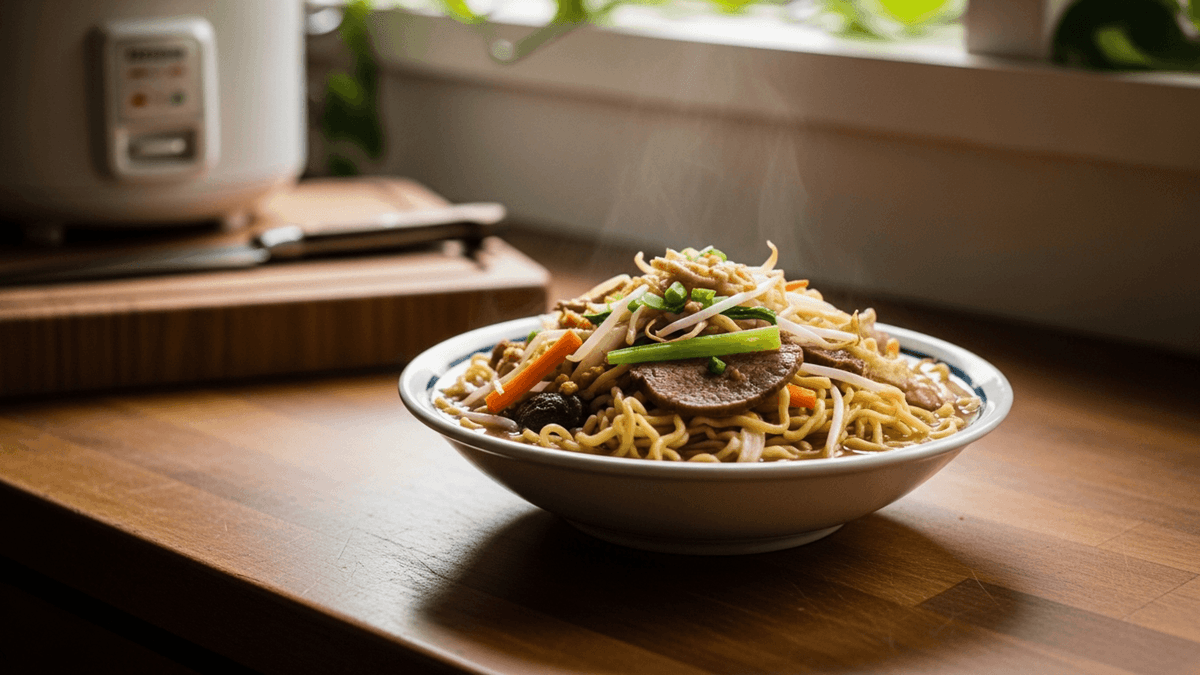
- Pancit on the side
- Lumpia stacked alongside
- A pile of atchara (pickled green papaya) for brightness
- Dipping sauce in a small bowl
For a fuller plate-lunch-style serving, add a scoop of Hawaiian mac salad — that is the local Hawaii twist on the Filipino party plate.
Storage and reheating
Lechon skin loses its shatter within a few hours, which is why it is almost always served straight from the roast. Leftover meat keeps in the fridge for 4 days. Reheat in a covered skillet with a splash of water or broth over medium-low heat. For the skin, a hot dry pan or a 400°F oven for 3-4 minutes can revive some of the crackle, but it will not fully return. Chop leftover lechon and make sisig (pan-crisped and seasoned with onion, calamansi, chili) — that is the traditional second-day move in Filipino households, and it works with Hawaii leftovers too.
Freeze leftover meat (not skin) in 1-pound portions for up to 3 months. Defrost overnight in the fridge before reheating.
What to read next
For the other major pig preparation in Hawaii, see what kalua pig is (imu method) and the oven-roasted kalua version. For more Filipino-Hawaiian staples, see chicken adobo, lumpia, and pancit. For the broader plate-lunch format that ties all of it together, see the Hawaii plate lunch guide.